

Process
How a water job runs
The same steps and the same standards on every water job. Paperwork first, contents out before cutting, readings taken the same way every visit, and nothing beyond the approved scope without your signature.
Section 01
Work order
Eight steps, in order
A 111 water job runs in eight steps: a request and first visit, signed paperwork before any work, contents out before cutting, photographs and readings taken to one standard, a stop before anything beyond the approved scope, debris carried out clean, and a closeout with the full file.
- 01
Request and first visit
You send the call-back form and a team member calls you back. On the first visit we look at the damage, take starting readings, and tell you plainly what we see and what we recommend.
On the recordStarting video, first readings, and a note of what was found.
- 02
Paperwork before work
No work starts until you have signed the authorization and approved the scope. The scope is written in plain language: what we found, what we plan to do, and what is not included. What we found is recorded as observations, not a finding on coverage.
On the recordSigned authorization and signed scope approval.
- 03
Contents out first
Belongings leave each room before any cutting starts in that room. One dry, unaffected room is kept as the reference, so every wet reading can be compared with a dry one in the same home.
On the recordRoom-by-room inventory and the reference room on the moisture map.
- 04
Photographs to one standard
Every affected room is photographed before work starts: each corner, the floor, and the ceiling. Each moisture reading is photographed with the meter and the spot in the same frame. Cut lines are photographed with a tape measure before the cut. Photos are labeled by room and uploaded every day.
On the recordA dated photo set, labeled by room.
- 05
Readings to one standard
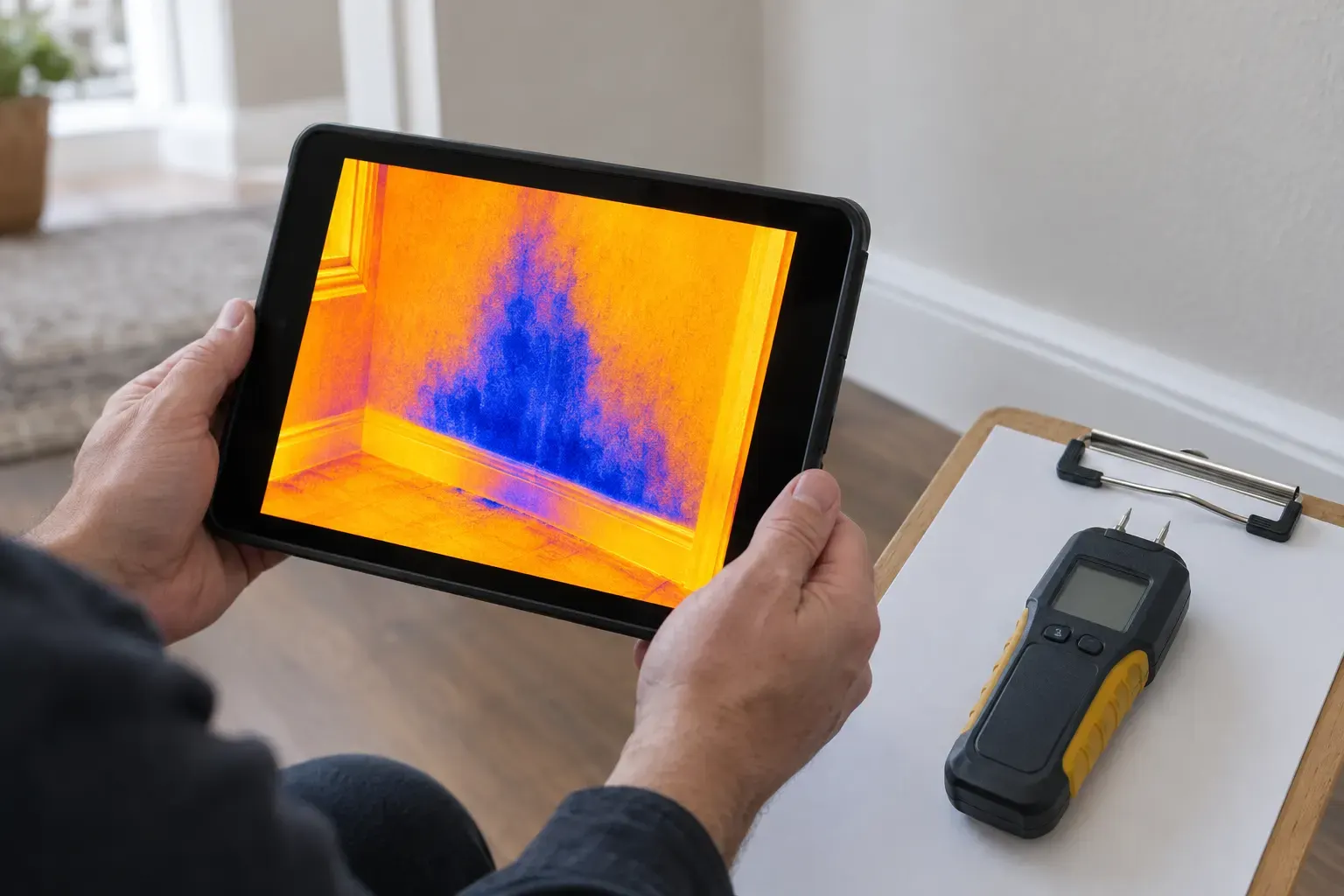
We read the same points, with the same meter, on the same setting, every visit. A point counts as dry only when it reads at or below its dry goal. Equipment stays in a room until every point in that room is dry. If a point shows no drop for two visits in a row, we stop and call before changing anything.
On the recordA reading log with points, visits, and the dry goal for each point.
- 06
Stop and call before going further
If the work needs to go beyond the approved scope, such as wet material above a cut line or damage that was hidden, the team member stops, records it with photos and readings, and calls before doing more. Every change is put in writing on a change order before the work is done.
On the recordPhotos, readings, and a signed change order for each change.
- 07
Debris out clean
Removed materials are bagged inside the containment area, carried out on a covered path, and never stacked in the house or on the lawn. Bags and loads are counted and photographed each day.
On the recordDaily debris counts with photos.
- 08
Closeout
When every point has reached its dry goal, the equipment comes out and we walk the property with you. You receive the full file and keep it.
On the recordFinal readings, equipment log, and the signed completion record.
Field rules
The rules every team member follows
These rules keep the file accurate and keep the work inside what you approved.
Rule sheetWater jobs
- Nothing starts before the authorization and scope approval are signed.
- Contents leave a room before any cutting in that room.
- A dry room is kept as the reference.
- Same points, same meter, same setting, every visit.
- A point is dry only at or below its dry goal.
- Equipment stays until every point in the room is dry.
- Two visits with no drop means stop and call.
- Anything beyond the approved scope is stopped, documented, and approved in writing first.
What is recorded
The file, item by item
- Initial video walk-throughRecorded before any equipment is placed.
- Room-by-room photographsBefore, during, and after the work.
- Moisture map and readingsPoints marked and logged on every visit.
- Drying equipment logWhat was placed, where, and when it was removed.
- Written scopeLine-item scope of the mitigation work performed.
- Contents inventoryEach item listed, photographed, and tracked by room.
- Non-salvageable listItems that cannot be restored, photographed before disposal.
- Completion recordSigned by the property owner at closeout.
What you receive
- An honest assessment. A team member looks at the damage in person and tells you plainly what we see and what we recommend.
- A written scope before work starts. You know what we plan to do and why, and you can share it with your insurance company.
- Photo and video documentation. Every affected area is recorded before, during, and after the work.
- Moisture readings and drying records. Logged on each visit until materials reach their drying goals.
- A room-by-room contents inventory. When contents are packed out, each item is listed, photographed, and tracked.
- A closeout file. Photos, readings, inventory, scope, and the signed completion record in one place.
Insurance and deductible notice
Texas law requires a person insured under a property insurance policy to pay any deductible applicable to a claim made under the policy. It is a violation of Texas law for a seller of goods or services who reasonably expects to be paid wholly or partly from the proceeds of a property insurance claim to knowingly allow the insured person to fail to pay, or assist the insured person's failure to pay, the applicable insurance deductible.
111 Restoration is a mitigation and restoration contractor. We are not a public insurance adjuster or a law firm. We do not negotiate claims, interpret policies, or give legal advice. What we do is document the damage and our work thoroughly, and present our scope of work with photos, readings, and records to you and, with your permission, to your adjuster.
Coverage and payment decisions are made by your insurance company under your policy.
FAQ
Process questions
Do I have to sign anything on the first visit?
Not to get an assessment. The first visit is for looking at the damage and explaining what we recommend. Work starts only after you sign the authorization and approve the written scope. If water is still spreading, we will explain what happens if mitigation waits.
What does the scope approval say?
It explains in plain terms what we found, what we plan to do to dry the home and protect your belongings, and what is not included. What we found is written as observations, not a finding on what caused the damage or on insurance coverage. You can see a sample on our sample file page.
What happens if more work is needed?
The team member stops, photographs the condition, takes readings, and calls before doing more. Any change to the scope is put in writing on a change order before the work is done.
Will you talk to my insurance company?
We share documentation with your adjuster when you ask us to, and we answer their questions about the work. We do not negotiate your claim or interpret your policy. Those conversations stay between you and your insurance company.
Open a file
Water or fire damage? Talk to a team member.
We respond 24 hours a day. Send the short form and a team member will call you back within 90 minutes. We come out, look at the damage, and give you an honest assessment. There is no pressure to sign anything on the first visit.
What goes in your file
- 01An honest assessment. A team member looks at the damage in person and tells you plainly what we see and what we recommend.
- 02A written scope before work starts. You know what we plan to do and why, and you can share it with your insurance company.
- 03Photo and video documentation. Every affected area is recorded before, during, and after the work.
- 04Moisture readings and drying records. Logged on each visit until materials reach their drying goals.
- 05A room-by-room contents inventory. When contents are packed out, each item is listed, photographed, and tracked.
- 06A closeout file. Photos, readings, inventory, scope, and the signed completion record in one place.
Intake sheetForm 111-A
Request a call back
Tell us where and what happened. Required fields are marked.