Responding 24 hours a day

Field Notes 005

San Marcos: What Smoke Does Next After a Kitchen Fire

A small kitchen fire in a San Marcos home can leave smoke residue and odor far beyond the kitchen. Where smoke goes, what to avoid, and when to have the home assessed.

Exhibit AField Notes / 005

Fire / Residential   San Marcos  

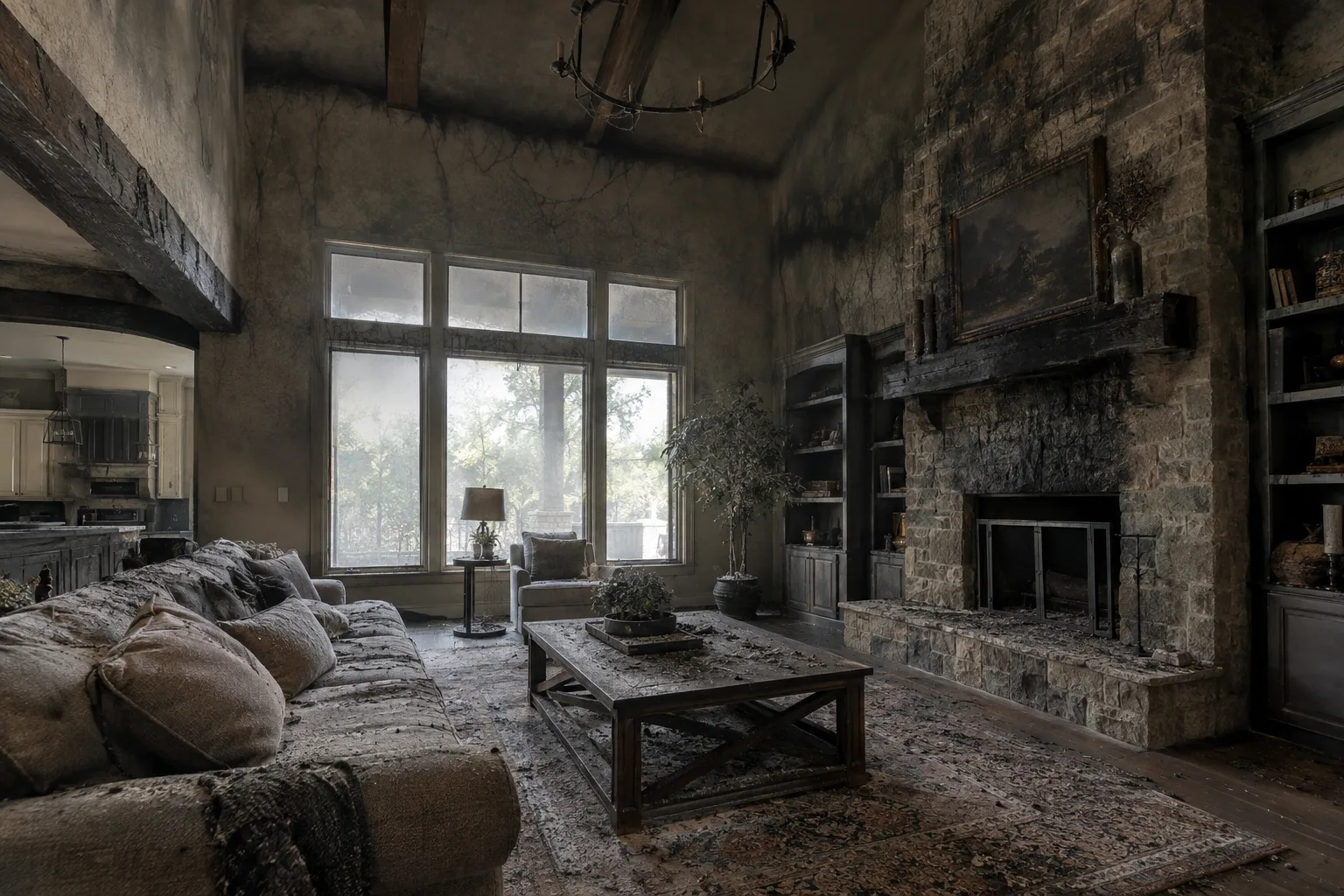
Even a small kitchen fire can send smoke through the whole house. Residue settles on walls, cabinets, fabrics, and inside the air system, and the odor stays as long as the residue does. Do not wipe soot or run the air system until the home has been assessed.

Cooking and home fires

The National Fire Protection Association states that cooking is a leading cause of reported home fires, home fire injuries, and home fire deaths. Kitchen fires are common, and many of them are small. The smoke they leave behind is often the bigger job.

Where the smoke goes

Smoke follows air movement: up stairwells, through open doors, into closets and cabinets, and through ductwork. That is why a bedroom down the hall can smell like the kitchen.

What not to do

  • Do not wipe soot from painted walls or cabinets.
  • Do not run the central air or heat until it has been checked.
  • Do not use food or medicine exposed to heat or smoke.
  • Do not cover the odor with fragrance.

What the work involves

Cleaning comes first, tested surface by surface. Deodorization follows cleaning. Belongings can be packed out, cleaned, and returned. Read our Smoke damage after a fire: what to know and what to avoid guide or see our fire and smoke service.

111 Restoration in San Marcos

This post is general information, not insurance or legal advice. Client names, photos, and identifying details are never published.

Open a file

Water or fire damage? Talk to a team member.

We respond 24 hours a day. Send the short form and a team member will call you back within 90 minutes. We come out, look at the damage, and give you an honest assessment. There is no pressure to sign anything on the first visit.

What goes in your file

  • 01An honest assessment. A team member looks at the damage in person and tells you plainly what we see and what we recommend.
  • 02A written scope before work starts. You know what we plan to do and why, and you can share it with your insurance company.
  • 03Photo and video documentation. Every affected area is recorded before, during, and after the work.
  • 04Moisture readings and drying records. Logged on each visit until materials reach their drying goals.
  • 05A room-by-room contents inventory. When contents are packed out, each item is listed, photographed, and tracked.
  • 06A closeout file. Photos, readings, inventory, scope, and the signed completion record in one place.

See our process

Intake sheetForm 111-A

Request a call back

Tell us where and what happened. Required fields are marked.

Send the form and a team member will call you back within 90 minutes. We use your details only to respond to this request. See our privacy notice.

Request a call back