

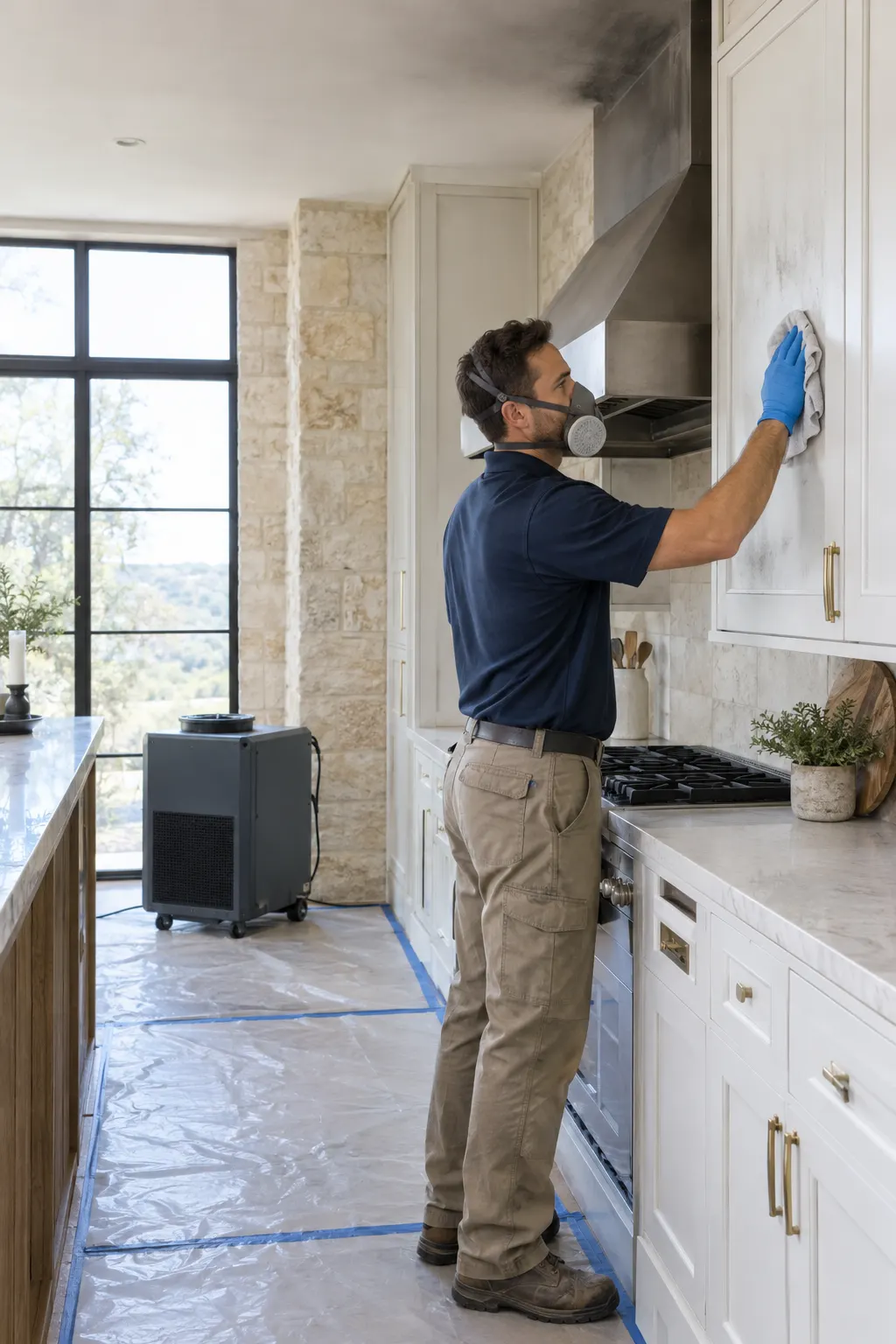
Smoke damage is residue and odor left by a fire, often far from the flames. After a fire, stay out until the fire department says it is safe, do not wipe soot or run the air system, record the damage, and have the home assessed so residue can be cleaned before it sets into surfaces.
Why smoke damage spreads
Smoke follows air movement. It moves through open doors, up stairwells, into closets and cabinets, and through ductwork. That is why rooms the fire never reached can still smell and show residue.
What not to do
- Do not wipe soot from walls, fabric, stone, or art. It smears and can set into the surface.
- Do not run the central air or heat until the system has been checked.
- Do not use food, cosmetics, or medicine exposed to heat or smoke.
- Do not switch on electronics that were near heat or smoke.
What fire and smoke mitigation involves
Mitigation secures the home and stops the damage from getting worse: board-up and roof tarping, removal of firefighting water, containment, soot and residue cleaning tested surface by surface, odor control after cleaning, and contents pack-out for off-site cleaning. See our fire and smoke service.
Insurance and smoke
The Texas Department of Insurance home insurance guide lists fire, lightning, and the sudden and accidental release of smoke among the risks most home policies cover. Your own policy decides your coverage, so read it or ask your agent.
This guide is general information, not insurance or legal advice. Updated November 2026.