Responding 24 hours a day

Field Notes 008

Wimberley: Flash Flood Safety, Before and After

Wimberley sits in a part of Texas known for fast-rising water. How to prepare for a flash flood, stay safe during one, and protect your home afterward.

Exhibit AField Notes / 008

Storm / Residential   Wimberley  

Central Texas is known as Flash Flood Alley, and Hill Country communities like Wimberley can see water rise quickly. Before a flood, know your risk and have several ways to get warnings. During a flood, never drive or walk into moving water. After a flood, wait for officials to say it is safe, then record the damage before cleanup.

Know the risk

Austin Emergency Management notes that Central Texas is known as Flash Flood Alley, and that heavy rain can cause serious damage quickly at any time of year, especially in spring. Check your address on the FEMA Flood Map Service Center.

During the flood

The National Weather Service warns that six inches of fast-moving flood water can knock an adult over, twelve inches of rushing water can carry away most cars, and two feet can carry away SUVs and trucks. Turn around. Do not cross flooded roads or low water crossings.

After the water goes down

  • Return only when officials say it is safe.
  • Treat flood water as contaminated.
  • Record every room before cleanup.
  • Tell your insurance company as soon as you can.
  • Most homeowners policies do not cover flood; flood coverage is a separate policy.

How we help

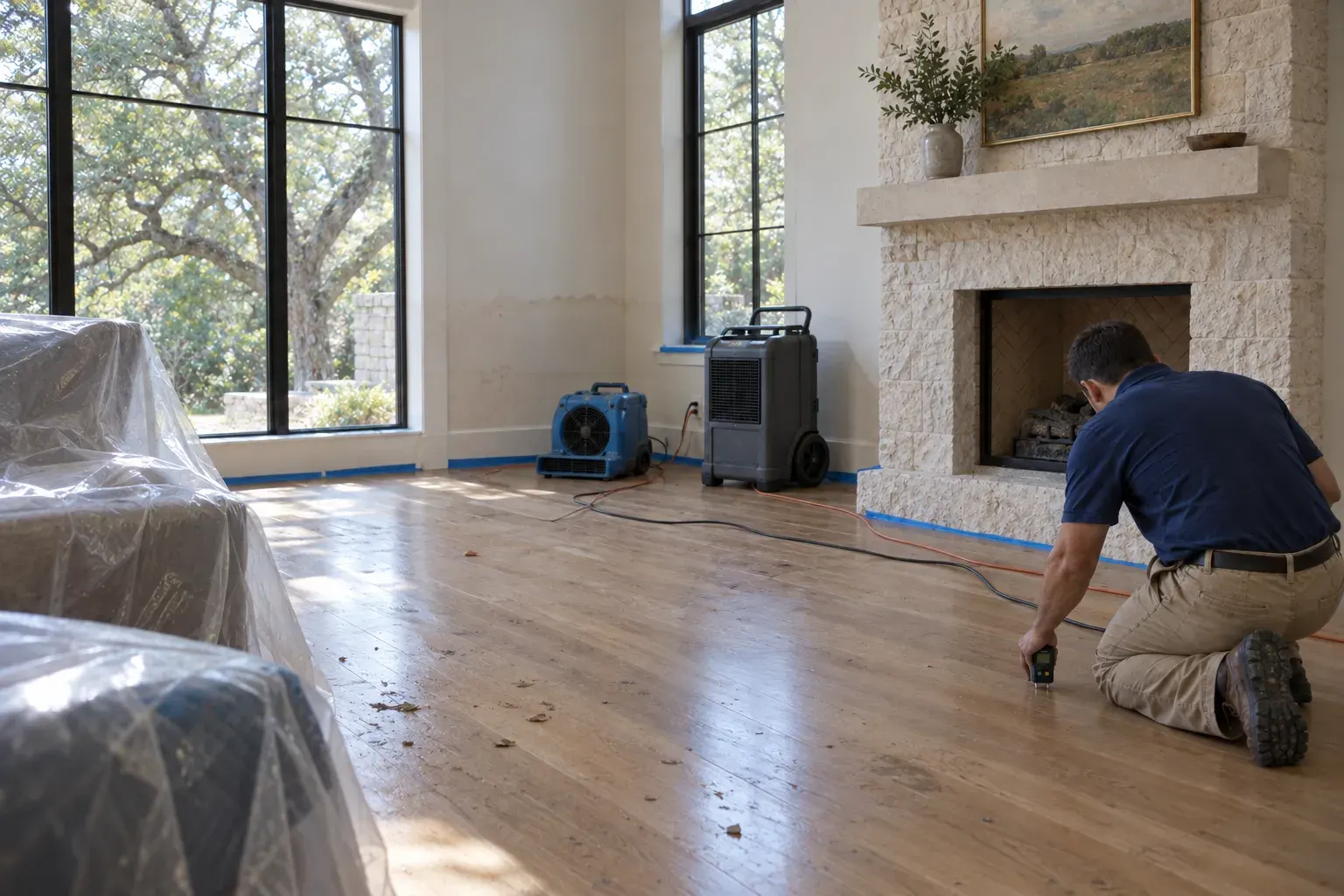
Flood water changes the job: containment, protective gear, and removal of porous materials the water reached. Read our Category 3 water: what changes when the water is contaminated guide.

111 Restoration in Wimberley

This post is general information, not insurance or legal advice. Client names, photos, and identifying details are never published.

Open a file

Water or fire damage? Talk to a team member.

We respond 24 hours a day. Send the short form and a team member will call you back within 90 minutes. We come out, look at the damage, and give you an honest assessment. There is no pressure to sign anything on the first visit.

What goes in your file

  • 01An honest assessment. A team member looks at the damage in person and tells you plainly what we see and what we recommend.
  • 02A written scope before work starts. You know what we plan to do and why, and you can share it with your insurance company.
  • 03Photo and video documentation. Every affected area is recorded before, during, and after the work.
  • 04Moisture readings and drying records. Logged on each visit until materials reach their drying goals.
  • 05A room-by-room contents inventory. When contents are packed out, each item is listed, photographed, and tracked.
  • 06A closeout file. Photos, readings, inventory, scope, and the signed completion record in one place.

See our process

Intake sheetForm 111-A

Request a call back

Tell us where and what happened. Required fields are marked.

Send the form and a team member will call you back within 90 minutes. We use your details only to respond to this request. See our privacy notice.

Request a call back