

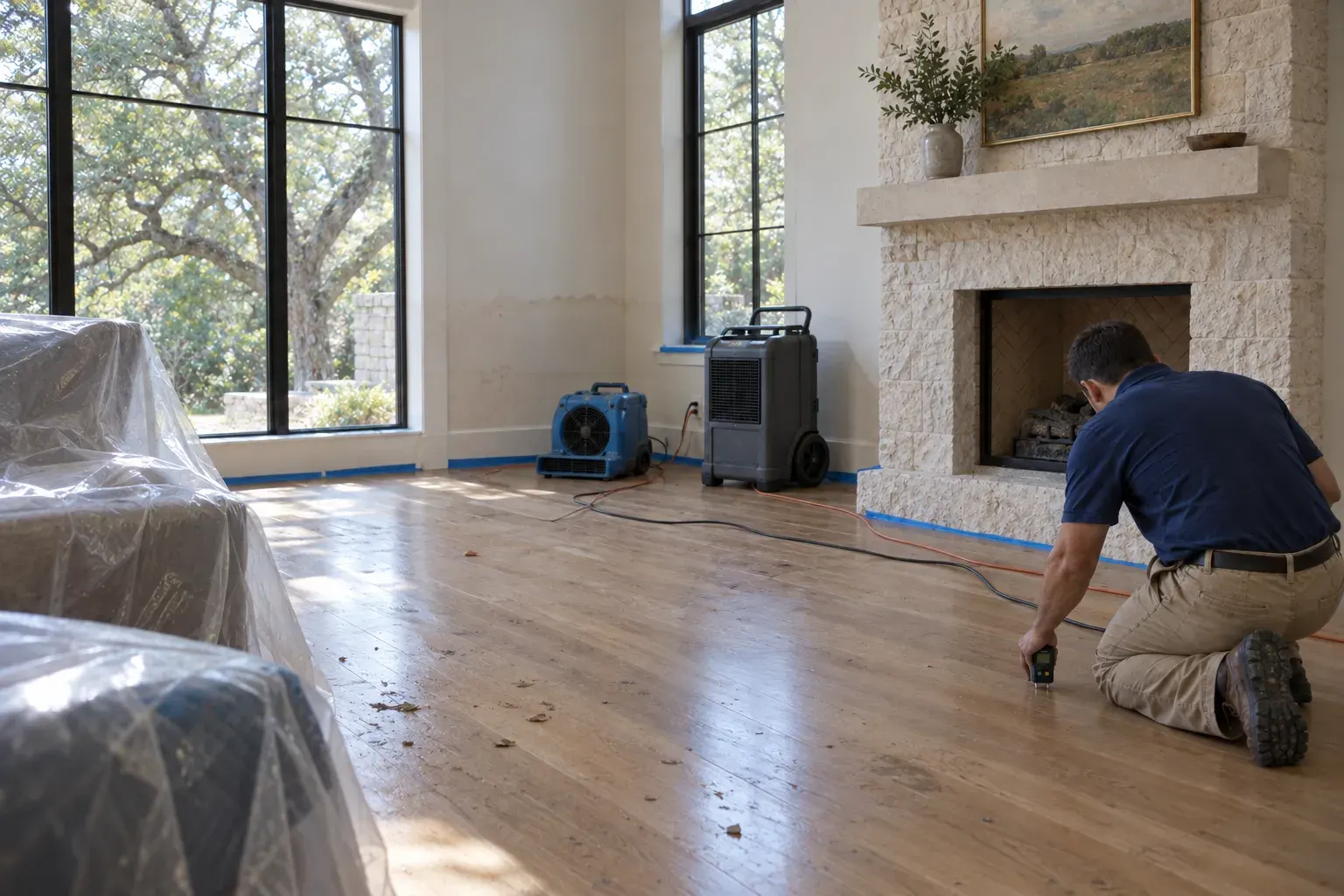
Category 3 water is contaminated water, such as sewage or water that has touched waste. When the water is Category 3, the job changes: the work area is closed off with containment, team members wear protective gear, most porous materials the water reached usually come out instead of being dried, and hard surfaces are cleaned before an antimicrobial is applied and drying begins.
What counts as Category 3
Water damage is sorted by how clean the water is. Water from a broken supply line starts out clean. Category 3 is the most contaminated group. In plain terms, it is water that is not clean and may carry what it has touched. Common examples:
- A sewer backup, or a toilet overflow that contains waste.
- Water that has run through or sat in contact with waste.
- Outside flood water that has come into the home from the ground or a creek.
- Clean water that has sat long enough, or traveled far enough through the home, that it is no longer clean.
A team member decides the category on site from the source and what the water touched, and writes it down in the file with photos. The category can change as the job goes on, and if it does, that is recorded too.
Containment comes first
Before anything is removed, the affected area is closed off from the rest of the home. Plastic walls and zip doors seal the work area. An air scrubber is set to pull air out of the work area so air moves in, not out. The goal is simple: what is inside the work area stays inside it.
Protective gear
Team members working inside containment wear protective gear: a respirator, gloves, eye protection, a protective suit, and boot covers. Gear comes off at the containment exit, so nothing from the work area is carried through the rest of the house. You will be asked to stay out of the contained area while work is underway.
Which materials usually come out
With clean water, many materials can be dried in place. With Category 3 water, porous materials the water reached usually come out, because they soak up what is in the water and cannot be reliably cleaned. These usually include:
- Carpet and carpet pad.
- Drywall and insulation below the water line, plus a margin above it.
- Upholstered furniture, mattresses, and other soft items that soaked up the water.
- Particleboard cabinet bases and other pressed-wood pieces that took on water.
Hard, non-porous surfaces such as tile, concrete, metal, and sealed wood are usually cleaned rather than removed. Every removal is marked on the moisture map and photographed, and the removed materials are listed in the file. Belongings that can be cleaned are handled through our contents process.
Debris handling
Removed materials are bagged inside containment. Wet or sharp debris is double-bagged. Each bag is cleaned on the outside before it leaves the work area and goes out on a covered path, never through the rest of the house uncovered. Bags are counted and photographed each day.
Cleaning, then antimicrobial, then drying
After removal, the work area is HEPA vacuumed and the remaining surfaces are cleaned. An antimicrobial is then applied to the cleaned surfaces as part of the cleaning step. It does not take the place of removal or cleaning: materials that should come out still come out. Only after cleaning do the air movers go in and drying begins, with readings taken at the same points on every visit until each point reaches its dry goal.
What is written down
Category 3 jobs get the same documentation as every 111 job, plus a record of what changed: the category and why, photos of the condition before cleanup, the containment layout, the materials removed, debris counts, and the cleaning steps. You receive the full file. You can see the layout of these documents on our sample file page.
Insurance
Whether a sewer backup or a flood is covered depends on your policy and is decided by your insurance company. Some policies cover sewer backup only with a separate endorsement, and flood damage is usually covered only by a separate flood policy. We document the damage and the work; questions about coverage belong with your insurance company or agent.
This guide is general information, not insurance or legal advice. Updated November 2026.