

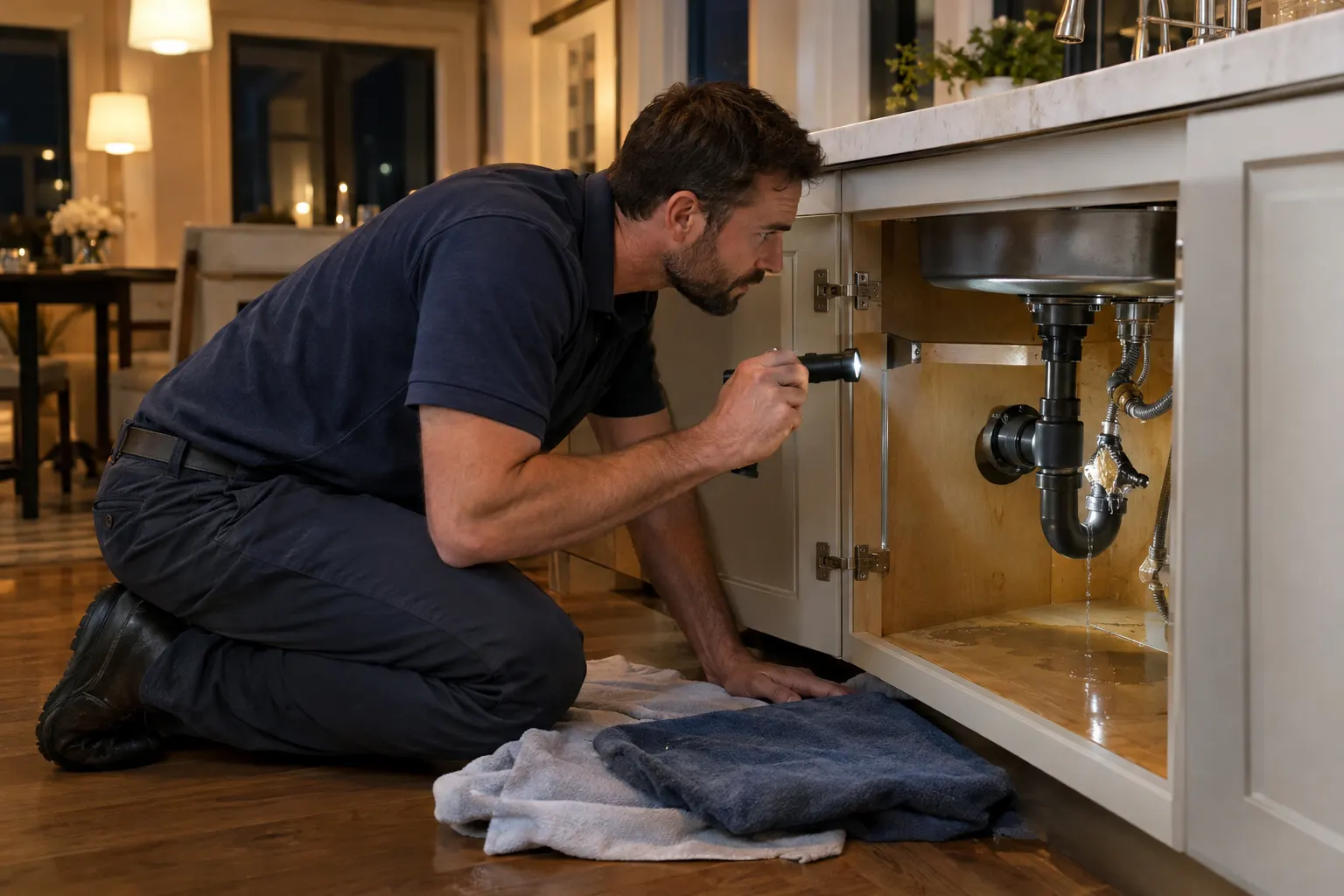
If a pipe bursts, shut off the main water valve first, then turn off power to wet rooms at the breaker if you can reach it without standing in water. Open a faucet at the lowest point of the house to drain the lines, record video of every affected room, move valuables to a dry space, and contact a water mitigation company.
1. Stop the water
Find the main shutoff valve. In many Central Texas homes it is near the front of the house where the water line enters, in a garage, or in a box near the street. Turn it fully closed. If the break is on a single fixture, the valve under that sink, toilet, or appliance may be enough.
2. Make the room safe
Water and electricity together are the real danger. If water is near outlets, cords, or appliances, turn off power to those rooms at the breaker panel, but only if you can reach the panel while standing on a dry floor. If you cannot, stay out of the room.
3. Drain the lines
Open a faucet at the lowest point of the house, and one at the highest, to let the remaining water in the lines run out where it can do no harm.
4. Record before you move anything
Walk through with your phone recording video, then take photos. Show where the water came from, how far it spread, and what it reached. The Texas Department of Insurance advises taking pictures of the damage and not making permanent repairs until an adjuster has seen it.
5. Lift and move what you safely can
Move rugs, art, books, documents, and electronics to a dry room. Put aluminum foil or plastic under furniture legs on wet floors. Leave heavy furniture where it is.
6. Request mitigation
Drying should start as soon as possible, because water keeps wicking into drywall, cabinets, and floors. Send the call-back form and a team member will call you back within 90 minutes. A team member will come out, look at the damage, and give you an honest assessment.
This guide is general information, not insurance or legal advice. Updated November 2026.