

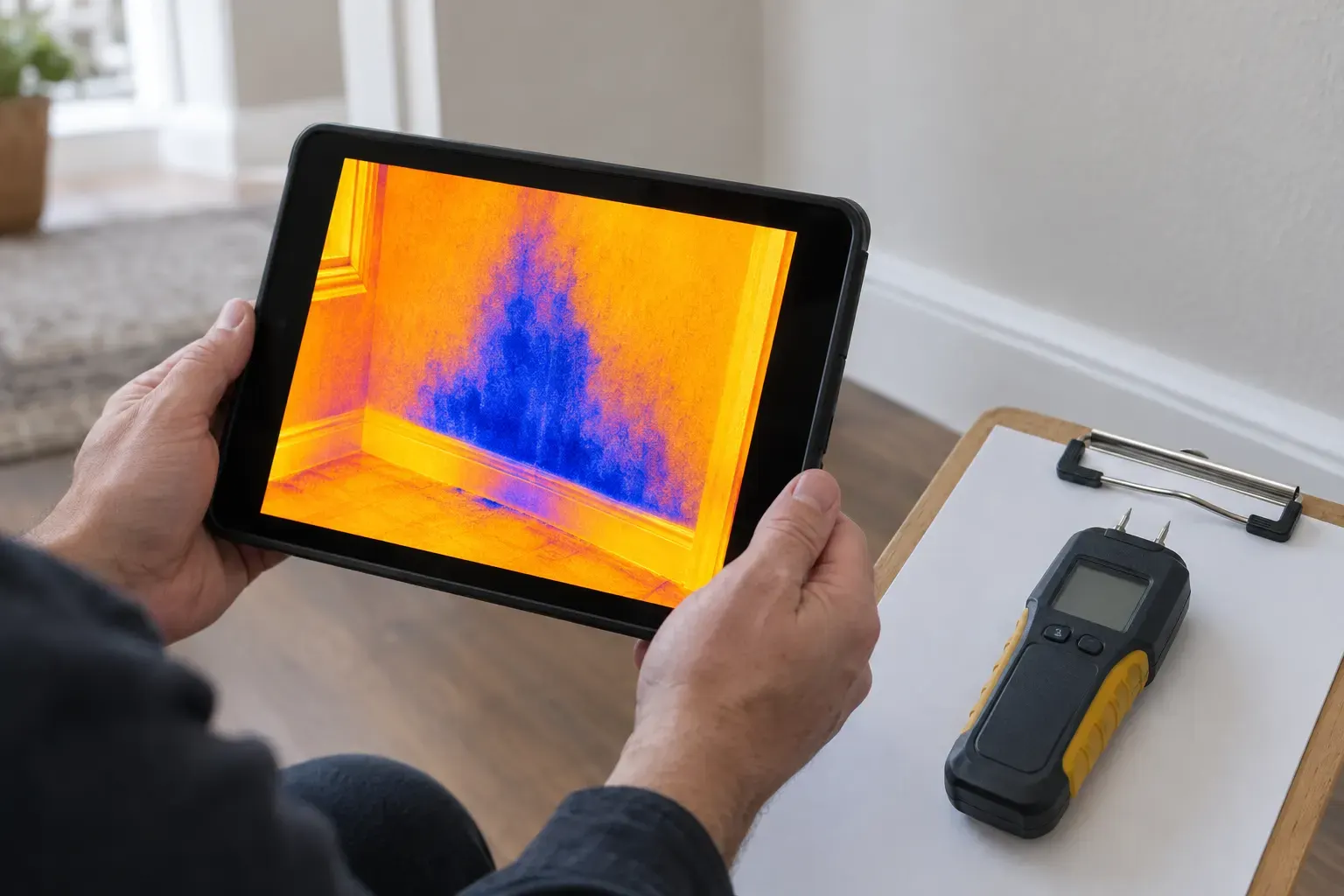
Drying is measured with moisture meters, not by touch. A team member takes readings of affected materials and compares them with readings from a dry, unaffected area of the same home, which sets the drying goal. Readings are taken and logged on each visit, and drying is complete when affected materials reach that goal. The readings, the map, and the log become part of your file.
Why touch is not enough
Drywall, wood, and cabinets can feel dry on the surface while holding water inside. Water that stays in materials can cause swelling, odor, and further damage after the equipment leaves. Measuring is the only way to know.
Setting the drying goal
On the first visit, a team member takes readings in a dry, unaffected area of your home. Those readings show what dry looks like for your materials in your conditions. That becomes the goal the wet materials must reach.
The moisture map
Each reading location is marked on a floor plan, so the same points can be measured on every visit. The map shows where the water went, where materials were removed, and where equipment was placed.
Daily readings and logs
Readings are taken and logged on each visit until materials reach their drying goals. Equipment can be moved or adjusted based on what the readings show. You can see what that looks like on our sample file page.
When equipment comes out
Equipment comes out when the readings say the materials are dry, not on a fixed day count. Some jobs dry faster and some take longer, depending on the materials, the amount of water, and how long it sat.
What you receive
The moisture map, the readings from every visit, and the drying log are part of your closeout file, so you and your adjuster can see how the home was dried and when it reached its goals.
This guide is general information, not insurance or legal advice. Updated November 2026.