Responding 24 hours a day

Guide

Should you stay in the home during drying?

Many families stay home while water damage is dried. What drying equipment is like to live with, and when it makes sense to stay somewhere else.

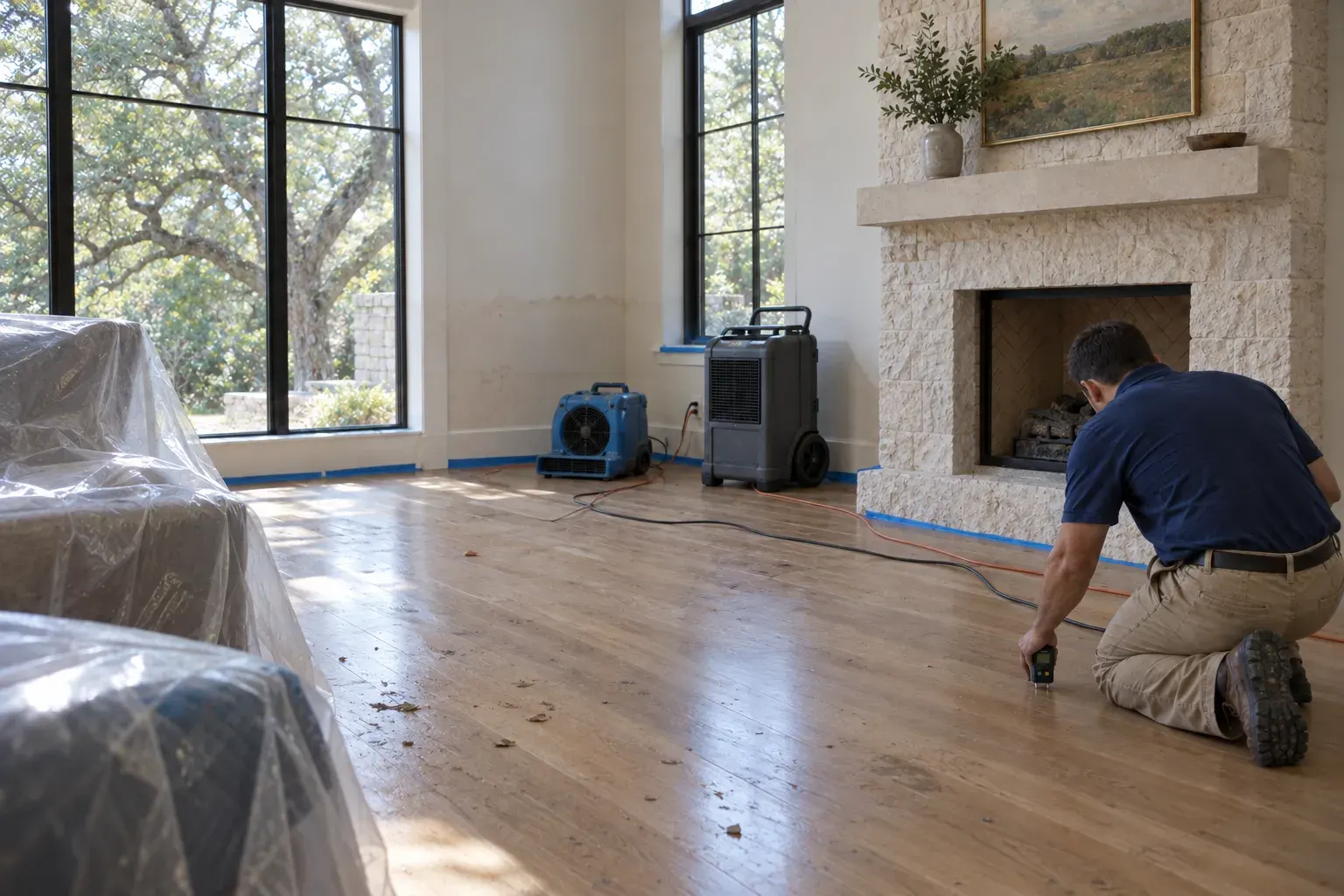
Drying equipment running in a living room while a team member takes readings
Exhibit AReference / Guide

Many families stay in the home while it is dried, especially when the water came from a clean source and only part of the home is affected. Drying equipment runs day and night, makes noise, and adds heat, and the affected rooms are off limits. Staying somewhere else makes more sense when the kitchen or only bathroom is affected, the water was contaminated, the power is off, or someone in the home has health concerns.

What drying is like to live with

  • Noise: air movers and dehumidifiers run constantly.
  • Heat: equipment adds warmth to the affected rooms.
  • Power: equipment draws power and may use several circuits.
  • Access: affected rooms are off limits, and equipment should not be moved or switched off.

When staying usually works

  • The water came from a clean supply line or appliance.
  • Only part of the home is affected.
  • A working kitchen and bathroom are available.
  • Power is on and the home is safe.

When it makes sense to stay elsewhere

  • The water was contaminated, such as sewage or outside flood water.
  • The kitchen or the only bathroom is affected.
  • Containment closes off a large part of the home.
  • Power, water, or air conditioning is off.
  • Someone in the home is very young, elderly, or has health concerns.

If you leave

Take medications, documents, chargers, and daily essentials. Give your project contact a way to reach you and a way to access the home for readings. If your belongings need to leave too, our contents process keeps each item listed and tracked.

Insurance

Some policies include coverage for added living expenses when a home cannot be lived in. That is decided by your insurance company under your policy, so ask your agent. We do not decide coverage.

This guide is general information, not insurance or legal advice. Updated November 2026.

FAQ

Related questions

Can I turn the equipment off at night?

Please do not. Drying works because the equipment runs continuously. If noise or power is a problem, tell your project contact and we will look at options.

Is it safe for pets?

Keep pets out of the affected rooms and away from equipment and cords. If the water was contaminated, keep pets out of the home or the contained area entirely.

Open a file

Water or fire damage? Talk to a team member.

We respond 24 hours a day. Send the short form and a team member will call you back within 90 minutes. We come out, look at the damage, and give you an honest assessment. There is no pressure to sign anything on the first visit.

What goes in your file

  • 01An honest assessment. A team member looks at the damage in person and tells you plainly what we see and what we recommend.
  • 02A written scope before work starts. You know what we plan to do and why, and you can share it with your insurance company.
  • 03Photo and video documentation. Every affected area is recorded before, during, and after the work.
  • 04Moisture readings and drying records. Logged on each visit until materials reach their drying goals.
  • 05A room-by-room contents inventory. When contents are packed out, each item is listed, photographed, and tracked.
  • 06A closeout file. Photos, readings, inventory, scope, and the signed completion record in one place.

See our process

Intake sheetForm 111-A

Request a call back

Tell us where and what happened. Required fields are marked.

Send the form and a team member will call you back within 90 minutes. We use your details only to respond to this request. See our privacy notice.

Request a call back