

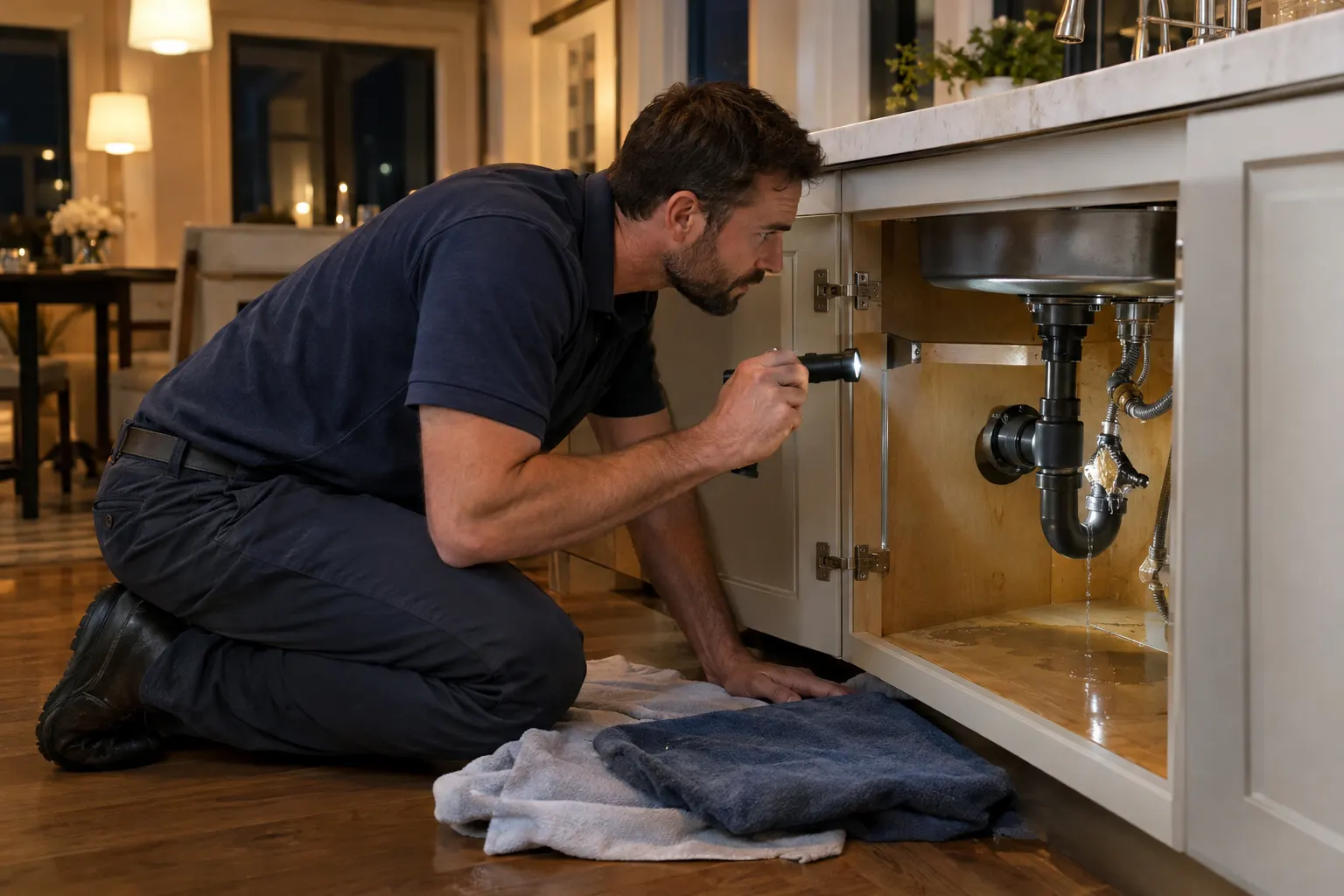
If your water heater is leaking or has burst, close the cold water supply valve on top of the tank, then shut off the power at the breaker for an electric heater or turn the gas control to off or pilot for a gas heater. If you smell gas, leave the house and call the gas company or 911 from outside. Then record the damage, move belongings out of the water, and contact a water mitigation company.
1. If you smell gas, leave first
A gas smell changes everything. Do not touch switches or appliances. Get everyone out, then call the gas company or 911 from outside. Everything else on this page can wait until the gas is handled.
2. Stop the water to the tank
Most water heaters have a cold water supply valve on the pipe that runs into the top of the tank. Turn it closed. If it will not move, or the leak is from the supply line itself, close the main water valve for the house.
3. Shut off the heat source
For an electric heater, turn off its breaker at the panel, but only if you can reach the panel standing on a dry floor. For a gas heater, turn the control knob to off or pilot. Follow the label on your unit.
4. Do not drain a hot tank yourself
The water inside can be hot enough to burn. Draining a tank is a job for a plumber once it has cooled. Your goal right now is only to stop new water from coming in.
5. Record, then move what you can
Video every wet area before anything is moved, then take photos. The Texas Department of Insurance advises taking pictures of damage and not making permanent repairs until an adjuster has seen it. Then lift rugs, boxes, and anything stored on the floor near the heater.
6. Check where the water went
Water heaters often sit in garages, closets, and attics. Water from an attic unit can come through ceilings below. Water from a closet unit can run under walls and into the next room. Look past the puddle.
7. Request mitigation
Water that has reached drywall, cabinets, or flooring keeps soaking in. Send the call-back form and a team member will call you back within 90 minutes. A team member will look at the damage in person and tell you plainly what we see.
This guide is general information, not insurance or legal advice. Updated November 2026.