Responding 24 hours a day

Guide

Commercial water damage: protecting the property and the operation

Water damage in an office, store, church, or multi-unit building affects people, operations, and records. What to do first and how mitigation can be planned around the way the property is used.

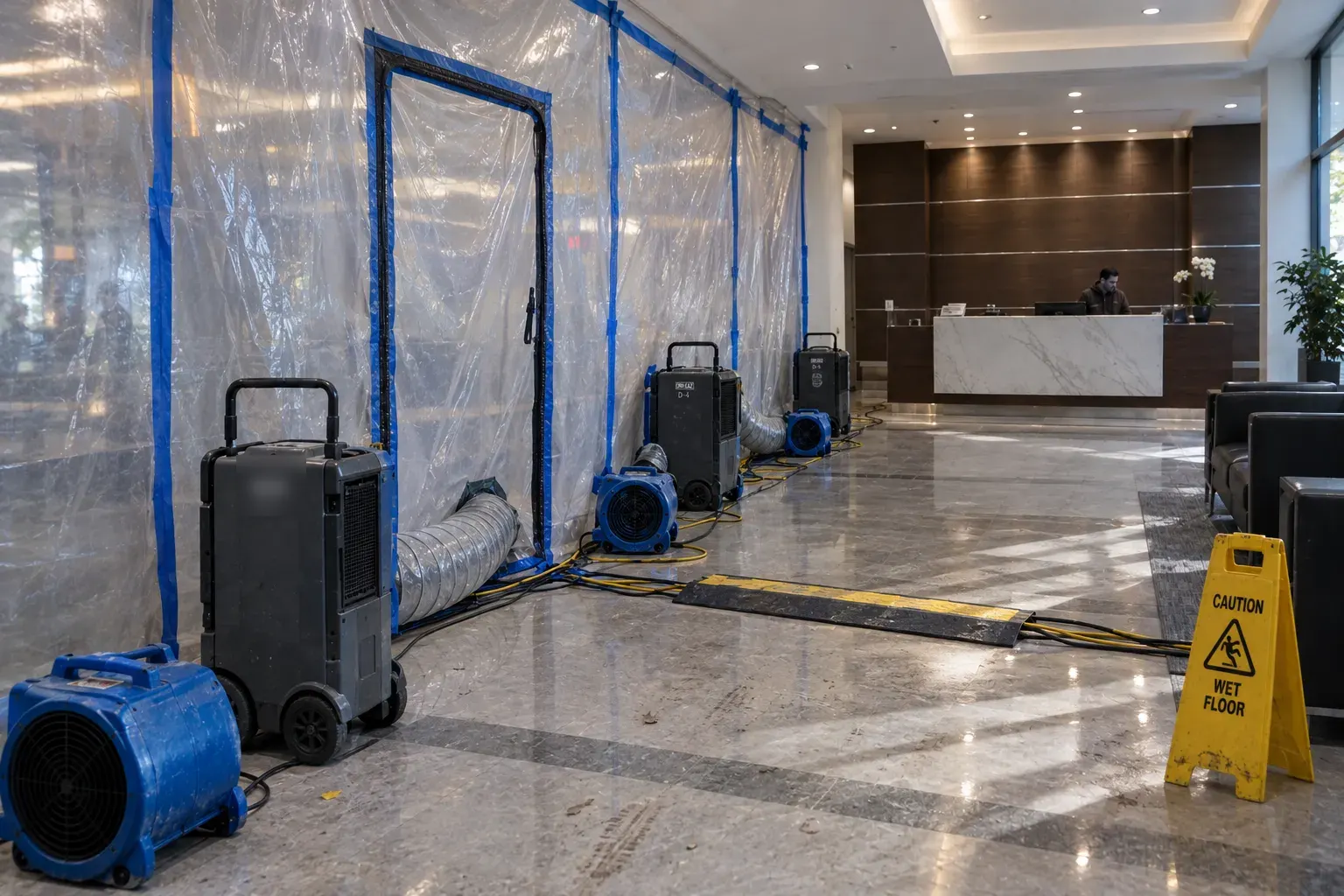
A commercial lobby with plastic containment walls and drying equipment around a work area
Exhibit AReference / Guide

When water damages a commercial property, stop the source, make the area electrically safe, keep people out of wet areas, record the damage, and contact a mitigation company. Mitigation can often be planned around how the property is used, with containment to separate the work area, so unaffected areas can stay in use when it is safe to do so.

First steps

  1. Stop the water. Close the valve for the affected fixture or the building water shutoff. Do not close fire sprinkler valves; leave those to the fire department or your fire protection contractor.
  2. Make it safe. Keep people away from wet floors, electrical equipment, and sagging ceilings.
  3. Record it. Video and photos before anything is moved.
  4. Tell the right people. Building owner, property manager, tenants affected, and your insurance contact.
  5. Request mitigation. Send the call-back form and a team member will call you back within 90 minutes.

Planning around the operation

A commercial job starts with a conversation about how the property is used: hours, access, sensitive areas, and what must stay open. Containment separates the work area from the rest of the property. Work can sometimes be scheduled around business hours. We tell you plainly what is possible and what is not.

Records and equipment

Files, inventory, and electronics near the water should be moved to a dry area if it is safe. Do not switch on equipment that got wet. Items that need to leave the property can go through our contents process, listed and tracked.

Documentation

Commercial claims often involve several parties. Every affected area is photographed and mapped, readings are logged on each visit, and the scope of work is written before work starts, so owners, managers, and adjusters are working from the same record. See our commercial service.

This guide is general information, not insurance or legal advice. Updated November 2026.

FAQ

Related questions

Can part of the building stay open during mitigation?

Often, yes, when the work area can be safely separated with containment. That decision depends on the damage and the use of the space, and we tell you honestly what we recommend.

Who should be the contact for the job?

One decision maker on your side keeps things moving. We send updates to that person and to anyone else you name.

Open a file

Water or fire damage? Talk to a team member.

We respond 24 hours a day. Send the short form and a team member will call you back within 90 minutes. We come out, look at the damage, and give you an honest assessment. There is no pressure to sign anything on the first visit.

What goes in your file

  • 01An honest assessment. A team member looks at the damage in person and tells you plainly what we see and what we recommend.
  • 02A written scope before work starts. You know what we plan to do and why, and you can share it with your insurance company.
  • 03Photo and video documentation. Every affected area is recorded before, during, and after the work.
  • 04Moisture readings and drying records. Logged on each visit until materials reach their drying goals.
  • 05A room-by-room contents inventory. When contents are packed out, each item is listed, photographed, and tracked.
  • 06A closeout file. Photos, readings, inventory, scope, and the signed completion record in one place.

See our process

Intake sheetForm 111-A

Request a call back

Tell us where and what happened. Required fields are marked.

Send the form and a team member will call you back within 90 minutes. We use your details only to respond to this request. See our privacy notice.

Request a call back