Responding 24 hours a day

Guide

Ceiling leak after a storm: what to do

Water coming through the ceiling after a storm means the roof or an opening has let water in. How to stay safe, limit the damage, and get the opening covered.

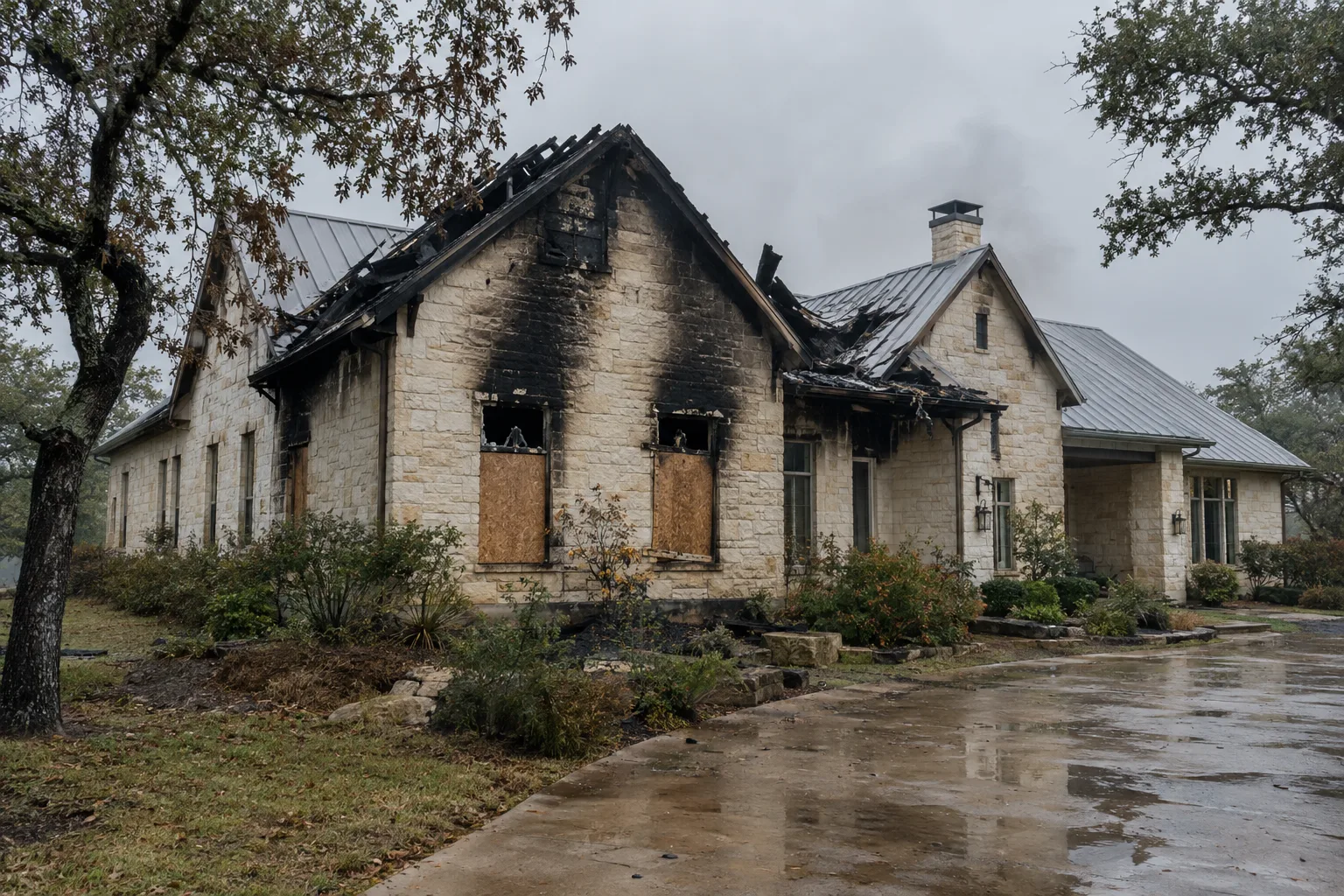
Illustration: a damaged home exterior
Exhibit AReference / Guide

If a storm causes a ceiling leak, keep people out from under a sagging or bulging ceiling, turn off power to the room at the breaker if water is near lights or outlets, catch the water, move belongings away, and record the damage. Do not go on the roof in bad weather. The opening needs to be covered, and the wet ceiling, insulation, and walls need to be assessed and dried.

Safety first

  • Stay out from under a ceiling that is sagging, bulging, or cracked. Wet drywall is heavy and can fall.
  • If water is near light fixtures, fans, or outlets, turn off power to that room at the breaker, but only from a dry floor.
  • Do not go on the roof during or right after a storm.

Limit the damage

  • Put buckets or containers under drips.
  • Move furniture, rugs, and electronics away from the leak.
  • Lay plastic or towels on floors around the area.

Record it

Video the ceiling, the walls, and the floor below before anything is moved. If you can safely see roof damage from the ground, photograph that too. The Texas Department of Insurance advises taking pictures of damage and making only the repairs needed to keep it from getting worse.

Get the opening covered

Until the roof or opening is covered, every rain adds water. Temporary tarping or board-up protects the home until permanent repairs are made.

Above the ceiling

Water that came through the ceiling usually soaked the insulation above it and may have run into wall cavities. A team member checks with moisture meters, decides what can be dried and what needs to come out, and records it on the moisture map.

Request help

Send the call-back form and a team member will call you back within 90 minutes. We document the damage and the work so your adjuster can review it. Your insurance company decides coverage.

This guide is general information, not insurance or legal advice. Updated November 2026.

FAQ

Related questions

Should I poke a hole in a bulging ceiling?

Do not stand under a bulging ceiling. If water is pooling in it, a professional can release it safely. Keep people and pets out of the room until then.

Is wet insulation dried or replaced?

It depends on the type of insulation and the water. A team member checks it and explains what we recommend, with photos in the file.

Open a file

Water or fire damage? Talk to a team member.

We respond 24 hours a day. Send the short form and a team member will call you back within 90 minutes. We come out, look at the damage, and give you an honest assessment. There is no pressure to sign anything on the first visit.

What goes in your file

  • 01An honest assessment. A team member looks at the damage in person and tells you plainly what we see and what we recommend.
  • 02A written scope before work starts. You know what we plan to do and why, and you can share it with your insurance company.
  • 03Photo and video documentation. Every affected area is recorded before, during, and after the work.
  • 04Moisture readings and drying records. Logged on each visit until materials reach their drying goals.
  • 05A room-by-room contents inventory. When contents are packed out, each item is listed, photographed, and tracked.
  • 06A closeout file. Photos, readings, inventory, scope, and the signed completion record in one place.

See our process

Intake sheetForm 111-A

Request a call back

Tell us where and what happened. Required fields are marked.

Send the form and a team member will call you back within 90 minutes. We use your details only to respond to this request. See our privacy notice.

Request a call back