Responding 24 hours a day

Guide

Frozen pipes in a Texas freeze: prevention and what to do

How to protect pipes before a Central Texas hard freeze, how to tell if a pipe has frozen, and what to do when it thaws and leaks.

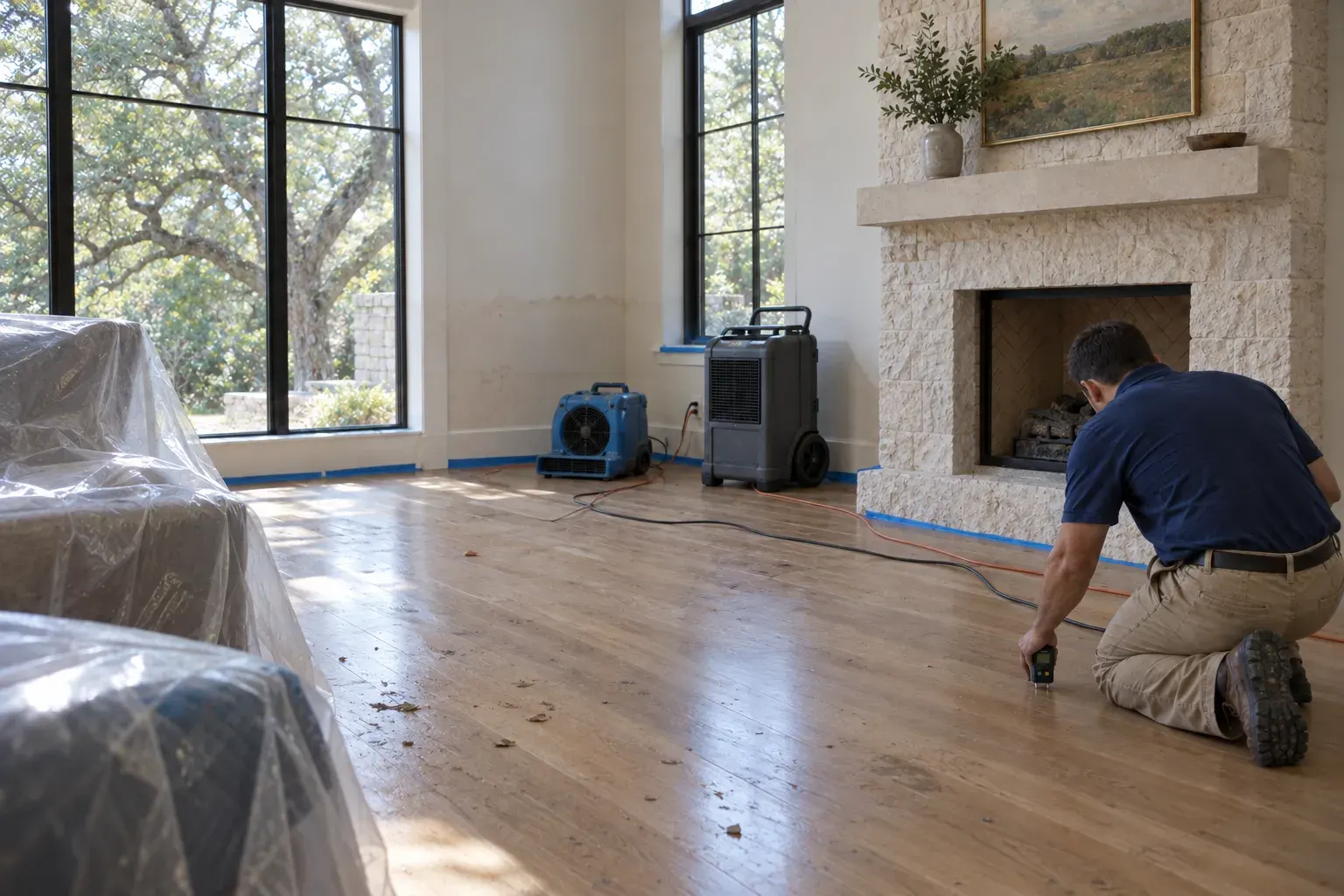
Drying equipment running in a living room while a team member takes readings
Exhibit AReference / Guide

Before a hard freeze, insulate exposed pipes, open cabinet doors on exterior walls, let faucets drip, and know where your main shutoff is. If a pipe freezes, keep the faucet open and warm the pipe gently. If it splits and leaks when it thaws, shut off the main and request water mitigation.

Why Central Texas homes are exposed

Hard freezes are not frequent here, which means many pipes run through attics, exterior walls, and garages without much protection. The National Weather Service summary of the February 2021 winter event in South-Central Texas lists burst water pipes among its impacts.

Before the freeze

  • Cover outdoor faucets and disconnect hoses.
  • Insulate exposed pipes in attics, garages, and crawl spaces.
  • Open cabinet doors under sinks on exterior walls.
  • Let faucets on exterior walls drip slowly.
  • Find and test your main shutoff valve.
  • If you will be away, ask someone to check the house or shut off the main water.

If a pipe has frozen

Low or no flow at a faucet is a common sign. Keep the faucet open, and warm the pipe gently with a hair dryer or warm towels. Never use an open flame.

When it thaws and leaks

Split pipes often leak only when the ice melts. Shut off the main, turn off power to wet rooms if you can do so safely, record the damage, and send the call-back form. Read the burst pipe guide.

This guide is general information, not insurance or legal advice. Updated November 2026.

FAQ

Related questions

Should I drip faucets during a freeze?

Many utilities and safety agencies recommend a slow drip on faucets served by exposed pipes. Follow any water conservation requests from your local utility.

How do I find hidden freeze damage?

Look for stains on ceilings and walls near exterior walls and attics, listen for running water when fixtures are off, and watch your water meter for movement.

Open a file

Water or fire damage? Talk to a team member.

We respond 24 hours a day. Send the short form and a team member will call you back within 90 minutes. We come out, look at the damage, and give you an honest assessment. There is no pressure to sign anything on the first visit.

What goes in your file

  • 01An honest assessment. A team member looks at the damage in person and tells you plainly what we see and what we recommend.
  • 02A written scope before work starts. You know what we plan to do and why, and you can share it with your insurance company.
  • 03Photo and video documentation. Every affected area is recorded before, during, and after the work.
  • 04Moisture readings and drying records. Logged on each visit until materials reach their drying goals.
  • 05A room-by-room contents inventory. When contents are packed out, each item is listed, photographed, and tracked.
  • 06A closeout file. Photos, readings, inventory, scope, and the signed completion record in one place.

See our process

Intake sheetForm 111-A

Request a call back

Tell us where and what happened. Required fields are marked.

Send the form and a team member will call you back within 90 minutes. We use your details only to respond to this request. See our privacy notice.

Request a call back